What Should First-Time Buyers Know About Beer Brewing Equipment?
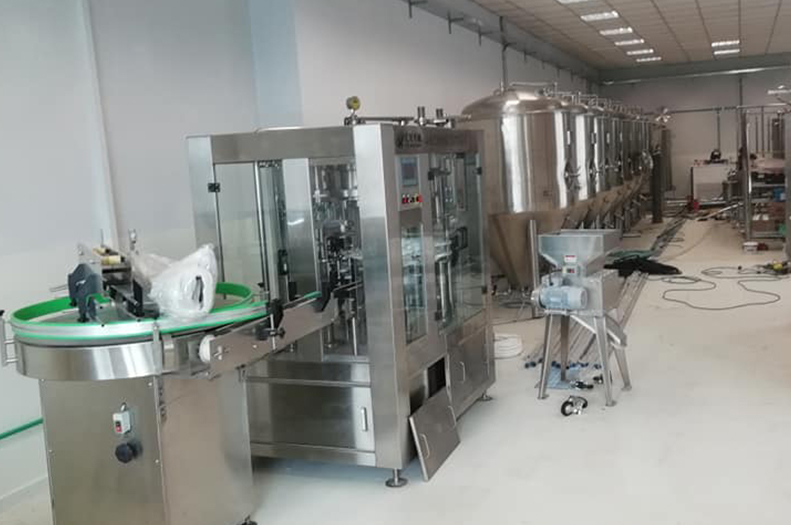
For first-time buyers, beer brewing equipment should be selected from the planned production volume, fermentation cycle, utility capacity, cleaning method, and packaging rate rather than tank size alone. A 10 BBL brewhouse can produce about 310 gallons of wort per batch, but actual output depends on brewhouse efficiency, tank residence time, beer losses, and the number of brews completed per week. Buyers should also budget for glycol cooling, CIP, pumps, heat exchange, water treatment, electrical work, drainage, installation, spare parts, and commissioning. A supplier quotation is useful only when its inclusions, specifications, utility requirements, and delivery scope are clearly defined.
A first purchase usually starts with one number: planned annual beer production. That number should then be converted into batch volume, weekly brew frequency, fermentation time, and packaging hours. For example, a brewery targeting 1,000 BBL per year needs a very different cellar arrangement from one producing 300 BBL, even if both use a 10 BBL brewhouse.
A 10 BBL batch is about 310 U.S. gallons of finished-equivalent volume, while a 20 BBL fermenter can hold two 10 BBL brews if the recipe and operating method allow it. Tank sizing should account for headspace, trub, yeast, transfer losses, and actual fill limits rather than assuming the stated vessel capacity is usable beer volume.
Plan the brewhouse, cellar, cooling system, and packaging line as one production system. A larger mash tun cannot compensate for insufficient fermenter capacity or a packaging line that runs at half the required rate.
The brewing schedule provides the next set of calculations. If a brewery completes 5 brews per week and beer spends 14 days in fermentation, at least several fermentation vessels must be available at the same time. A 2026 purchasing plan should also include projected production for at least the next 24 to 36 months when deciding how much cellar space and utility capacity to install.
A simple planning table helps:
| Item | Example planning figure |
|---|---|
| Brewhouse | 10 BBL |
| Brews per week | 5 |
| Fermentation residence | 14 days |
| Fermenter size | 20 BBL |
| Production style | 2-batch fills |
| Expansion period | 24–36 months |
The brewhouse itself may contain a mash tun, lauter tun, kettle, whirlpool, hot liquor tank, pumps, piping, and control equipment. Smaller systems often combine several functions to reduce floor area, while higher-output breweries may separate vessels so that processes can overlap.
The equipment arrangement should match the required number of brews per day. A brewery running one brew every 24 hours does not need the same vessel separation as a facility designed for 2 or 3 brews in a production day.
The fermentation cellar often determines actual output more than the brewhouse. Yeast management, fermentation temperature, dry-hopping schedules, conditioning time, and beer transfers can keep tanks occupied well after the wort production stage has ended. Brewers Association wastewater guidance notes that fermentation can account for almost 50% of biological oxygen demand and roughly 70% of suspended solids in typical brewery wastewater, showing why cellar operations should be included in facility planning rather than treated as a secondary area.
Cooling requirements should be calculated from peak demand, not simply the number of tanks delivered on opening day. A brewery may need to cool newly filled fermenters while another tank is being brought down for cold conditioning. For a planned 2026 expansion, leaving 20% to 30% of practical cooling capacity for additional tanks can be more useful than replacing an undersized chiller later.
Glycol system specifications should cover:
-
Chiller capacity at the expected ambient temperature
-
Reservoir size
-
Pump flow and pressure
-
Number and size of cooling jackets
-
Supply and return pipe diameter
-
Temperature-control range
-
Future tank connections
Water planning needs similar detail. Brewing uses water for mashing, sparging, wort cooling, tank rinsing, CIP, packaging, and general cleaning. Incoming water temperature also affects wort chilling performance; a hot summer supply can reduce heat-exchanger performance compared with colder winter conditions.
A 1,000-gallon brewing day may therefore require substantially more than 1,000 gallons of total facility water once cleaning and rinsing are included. Buyers should obtain actual flow and consumption estimates from the equipment supplier instead of applying a generic water-use number.
Material specification is another area where a quotation needs more detail. Many commercial systems use 304 stainless steel for product-contact construction, but buyers should still request the exact material grade for tanks, piping, fittings, and fabricated parts.
Interior weld quality matters because rough welds, crevices, and poor drainage make cleaning harder. Tank drawings should show weld locations, internal finish requirements, working pressure, test pressure, insulation thickness, jacket construction, manway dimensions, and connection sizes.
When a quotation says only “stainless-steel tank,” request the material grade, thickness, finish, pressure rating, and fabrication standard before comparing the price with another supplier.
Pressure-rated vessels also require careful review. Fermenters and bright beer tanks may operate under controlled pressure, while brewing vessels used for hot liquor or boiling service have different mechanical requirements. The pressure rating should be matched with the intended process rather than treated as a general equipment specification.
Cleaning equipment deserves the same attention as brewing vessels. A CIP system may include a caustic tank, acid tank, sanitizer tank, spray device, return pump, supply pump, hoses, valves, and control components. The Brewers Association has specifically identified CIP as generally more efficient than manual cleaning because controlled chemicals, flow, and temperature can improve vessel cleaning consistency.
The CIP design should allow adequate circulation through every product-contact surface. Piping should drain properly, fittings should avoid unnecessary dead sections, and spray devices should be sized for the vessel geometry. A system installed in 2026 should also be reviewed for chemical compatibility, temperature limits, pump materials, and operator safety.
Energy requirements should be calculated before equipment is ordered. Electric heating can suit smaller systems where adequate electrical service is already available, while steam systems introduce boiler or steam-generator requirements, condensate handling, ventilation, and additional installation work.
A brewery that adds three 20 BBL fermenters later may also need more glycol capacity, electrical service, floor drainage, and packaged-goods storage. Designing those connections during the first installation can reduce later construction work by a substantial amount.
Packaging needs to be included in the same calculation. A brewery producing 20 BBL per day does not automatically need a packaging line rated at 20 BBL per hour. Actual line output is affected by container handling, changeovers, rinsing, filling, seaming, labeling, coding, cleaning, and operator speed.
| Packaging format | Equipment commonly required |
|---|---|
| Kegs | Keg washer and filler |
| Cans | Depalletizer, rinser, filler/seamer, coder |
| Bottles | Bottle rinser, filler/capper, labeler |
| Mixed formats | Additional changeover and storage capacity |
Building conditions should be checked before tanks are manufactured. Record ceiling height, door widths, floor loading, drainage locations, electrical service, gas availability, ventilation routes, and equipment access paths.
For U.S. breweries, regulatory planning also belongs in the equipment process. TTB requires brewery applicants to provide a premises diagram showing dimensions and doors, and operating breweries must maintain specified production and inventory records. Current TTB guidance states that certain required brewery records must be retained for at least 3 years.
For a new brewery planned in 2026, permit and premises requirements should be checked before fabrication because changing the physical layout after installation can affect both construction and regulatory documentation. State and local requirements also vary, so the equipment layout should be reviewed with the relevant authorities and building professionals.
Supplier comparison should use one technical specification instead of several informal quotations. Ask every manufacturer to price the same tank capacities, vessel configuration, pump count, valve type, control system, glycol system, CIP package, platform, piping, electrical panel, documentation, installation scope, and spare parts.
A quotation comparison can use a simple scoring sheet based on measurable fields:
| Specification | Supplier A | Supplier B |
|---|---|---|
| Tank working volume | ___ | ___ |
| Stainless grade | ___ | ___ |
| Working pressure | ___ | ___ |
| Glycol capacity | ___ | ___ |
| CIP configuration | ___ | ___ |
| Electrical requirement | ___ | ___ |
| Installation included | Yes/No | Yes/No |
| Warranty | ___ | ___ |
| Spare-parts package | ___ | ___ |
Manufacturer references are worth checking before a deposit is paid. Ask for operating breweries using comparable tank sizes and production volumes, then ask those customers about delivery accuracy, commissioning, documentation, maintenance support, and replacement parts.
A supplier that delivered ten similar systems in 2024 or 2025 can provide more useful operating references than a company showing only showroom photographs. For an overseas installation, buyers should also confirm shipping terms, packing method, customs documents, unloading requirements, and responsibility for local installation.
The purchase contract should define equipment drawings, approval stages, fabrication schedule, factory testing, inspection procedures, shipping documents, warranty period, commissioning support, and final acceptance criteria. A clear document is particularly useful when the system contains dozens of valves, sensors, pumps, fittings, and electrical components.
Spare parts should be ordered with the system rather than after the first failure. Keep seals, valve seats, temperature probes, pump components, heating elements, fuses, contactors, and other frequently replaced items according to the manufacturer's recommended list.
The same approach applies to technical documentation. Request electrical drawings, piping diagrams, component lists, operating instructions, cleaning procedures, maintenance intervals, software information, and sensor specifications. These records can remain useful for years after the original installation team has left the project.
For first-time buyers, a practical Brewing Equipment specification should therefore contain enough measurable information for two independent suppliers to quote substantially the same system. A 2026 project can then compare capacity, material, cooling, cleaning, utility demand, installation scope, warranty, documentation, and expansion provisions on the same basis.