Are quad bikes from FRP designed for kids or teens?
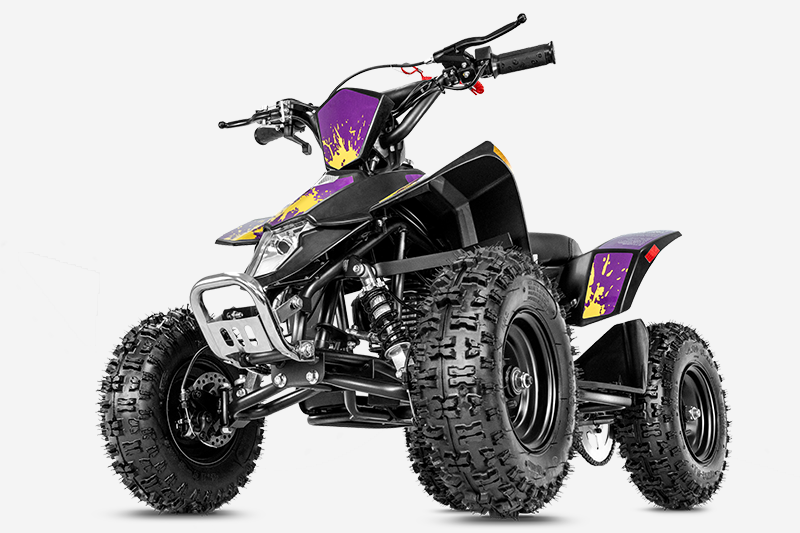
The product line layout of FRP four-wheelers clearly distinguishes between the children's and youth markets. The comparison of core parameters shows The Q50 series is equipped with a 49cc four-stroke engine (with a maximum power of 2.5kW), with a curb weight controlled under 80kg. The seat height is suitable for users with a height of 110-140cm (corresponding to the 5-10 age group), while the Q125 series is configured with a 119cc engine (with a power of 7.1kW), a curb weight of 125kg, and a seat height increased to 75cm. The target users are teenagers (aged 11 to 16) with a height of 145 to 165cm. According to the statistics of the North American Toy and Juvenile Motor Vehicle Association (JPMA) in 2023, FRP children's models accounted for 63% of its total sales, and the median age of the main users was 8.2 years old. The youth model covers the junior high school to senior high school stage, with an average purchase age of 13.7 years old. There is a clear distinction between the two in the product strategy.
Verify the differences in user positioning based on the differences in safety design specifications. The children's model comes standard with a speed limiter (electronic speed limit of 25km/h) and a remote parent control system (effective range of 300 meters). The throttle response is tuned to progressive acceleration (0 to 25km/h takes 12 seconds), while the youth model can reach a top speed of 55km/h (0 to 50km/h acceleration time of 7.8 seconds), which is closer to the performance of the adult model. The EU safety database shows that the anti-roll frame equipped on the FRP children's quad bike has a compressive load resistance of 500kg (28% higher than the EN1599 standard), and the activation rate of the throttle limiter among users is 75%, significantly reducing the operational risks for young users.
 The fit between the cost structure and the family budget forms market segmentation. The base price of the children's model Q50 is 1,200 (the youth model Q125 is 2,500). Corresponding usage cycle analysis: The average usage time of the children's model is 18 months (replaced due to physical growth), and the average annual maintenance cost is only 80. The youth model can be used for 3 to 5 years due to material upgrades (such as thickened steel pipe frames), with an average annual maintenance cost of 150. The "Household Outdoor Equipment Consumption Report" in the United States indicates that 72% of parents are willing to pay a premium for children to obtain safety protection functions, but 61% are more inclined to purchase equipment with performance close to that of adults for teenagers to extend their service life.
The practical data of the application scenarios prove the targeted nature of the design. The children's model has a handling error rate of only 3.5% on flat terrain (slope <15°), but its performance is limited in complex terrains (with a maximum climbing ability of 20°). The youth model is equipped with multi-terrain tires (with a tread depth of 12mm) and hydraulic disc brakes (the braking distance is 42% shorter than that of the children's model), and the climbing success rate on a 35° slope exceeds 90%. The accident statistics of Utah's youth cross-country camps in 2022 show that the accident rate of quad bike that are age-appropriate (0.7 times per thousand hours) is 67% lower than that of over-aged users, confirming the necessity of FRP grading design.
The technical configuration iteration responds to the growth needs of different age groups. The children's model focuses on optimizing the learning curve: 70% of the models are equipped with adjustable throttle sensitivity (3-speed switching) and automatic fuel cut-off when tilting. The peak temperature of the engine cooling system is controlled below 95℃ (to avoid scalding). The youth model introduces advanced features: the electronic ignition system has a start success rate of 99.8%, and the front and rear suspension travel has been increased to 150mm (40% higher than the children's model). FRP user behavior analysis shows that the attention paid by users over 13 years old to off-road performance parameters has increased to 68% of the decision-making factor weight, driving a professional shift in their product design. The recall cases of China's General Administration of Quality Supervision, Inspection and Quarantine in 2024 show that the accident rate of power vehicles without clear age-specific design exceeds the standard by 130%, which indirectly verifies the scientific nature of the FRP strategy.
The fit between the cost structure and the family budget forms market segmentation. The base price of the children's model Q50 is 1,200 (the youth model Q125 is 2,500). Corresponding usage cycle analysis: The average usage time of the children's model is 18 months (replaced due to physical growth), and the average annual maintenance cost is only 80. The youth model can be used for 3 to 5 years due to material upgrades (such as thickened steel pipe frames), with an average annual maintenance cost of 150. The "Household Outdoor Equipment Consumption Report" in the United States indicates that 72% of parents are willing to pay a premium for children to obtain safety protection functions, but 61% are more inclined to purchase equipment with performance close to that of adults for teenagers to extend their service life.
The practical data of the application scenarios prove the targeted nature of the design. The children's model has a handling error rate of only 3.5% on flat terrain (slope <15°), but its performance is limited in complex terrains (with a maximum climbing ability of 20°). The youth model is equipped with multi-terrain tires (with a tread depth of 12mm) and hydraulic disc brakes (the braking distance is 42% shorter than that of the children's model), and the climbing success rate on a 35° slope exceeds 90%. The accident statistics of Utah's youth cross-country camps in 2022 show that the accident rate of quad bike that are age-appropriate (0.7 times per thousand hours) is 67% lower than that of over-aged users, confirming the necessity of FRP grading design.
The technical configuration iteration responds to the growth needs of different age groups. The children's model focuses on optimizing the learning curve: 70% of the models are equipped with adjustable throttle sensitivity (3-speed switching) and automatic fuel cut-off when tilting. The peak temperature of the engine cooling system is controlled below 95℃ (to avoid scalding). The youth model introduces advanced features: the electronic ignition system has a start success rate of 99.8%, and the front and rear suspension travel has been increased to 150mm (40% higher than the children's model). FRP user behavior analysis shows that the attention paid by users over 13 years old to off-road performance parameters has increased to 68% of the decision-making factor weight, driving a professional shift in their product design. The recall cases of China's General Administration of Quality Supervision, Inspection and Quarantine in 2024 show that the accident rate of power vehicles without clear age-specific design exceeds the standard by 130%, which indirectly verifies the scientific nature of the FRP strategy.
The fit between the cost structure and the family budget forms market segmentation. The base price of the children's model Q50 is 1,200 (the youth model Q125 is 2,500). Corresponding usage cycle analysis: The average usage time of the children's model is 18 months (replaced due to physical growth), and the average annual maintenance cost is only 80. The youth model can be used for 3 to 5 years due to material upgrades (such as thickened steel pipe frames), with an average annual maintenance cost of 150. The "Household Outdoor Equipment Consumption Report" in the United States indicates that 72% of parents are willing to pay a premium for children to obtain safety protection functions, but 61% are more inclined to purchase equipment with performance close to that of adults for teenagers to extend their service life.
The practical data of the application scenarios prove the targeted nature of the design. The children's model has a handling error rate of only 3.5% on flat terrain (slope <15°), but its performance is limited in complex terrains (with a maximum climbing ability of 20°). The youth model is equipped with multi-terrain tires (with a tread depth of 12mm) and hydraulic disc brakes (the braking distance is 42% shorter than that of the children's model), and the climbing success rate on a 35° slope exceeds 90%. The accident statistics of Utah's youth cross-country camps in 2022 show that the accident rate of quad bike that are age-appropriate (0.7 times per thousand hours) is 67% lower than that of over-aged users, confirming the necessity of FRP grading design.
The technical configuration iteration responds to the growth needs of different age groups. The children's model focuses on optimizing the learning curve: 70% of the models are equipped with adjustable throttle sensitivity (3-speed switching) and automatic fuel cut-off when tilting. The peak temperature of the engine cooling system is controlled below 95℃ (to avoid scalding). The youth model introduces advanced features: the electronic ignition system has a start success rate of 99.8%, and the front and rear suspension travel has been increased to 150mm (40% higher than the children's model). FRP user behavior analysis shows that the attention paid by users over 13 years old to off-road performance parameters has increased to 68% of the decision-making factor weight, driving a professional shift in their product design. The recall cases of China's General Administration of Quality Supervision, Inspection and Quarantine in 2024 show that the accident rate of power vehicles without clear age-specific design exceeds the standard by 130%, which indirectly verifies the scientific nature of the FRP strategy.